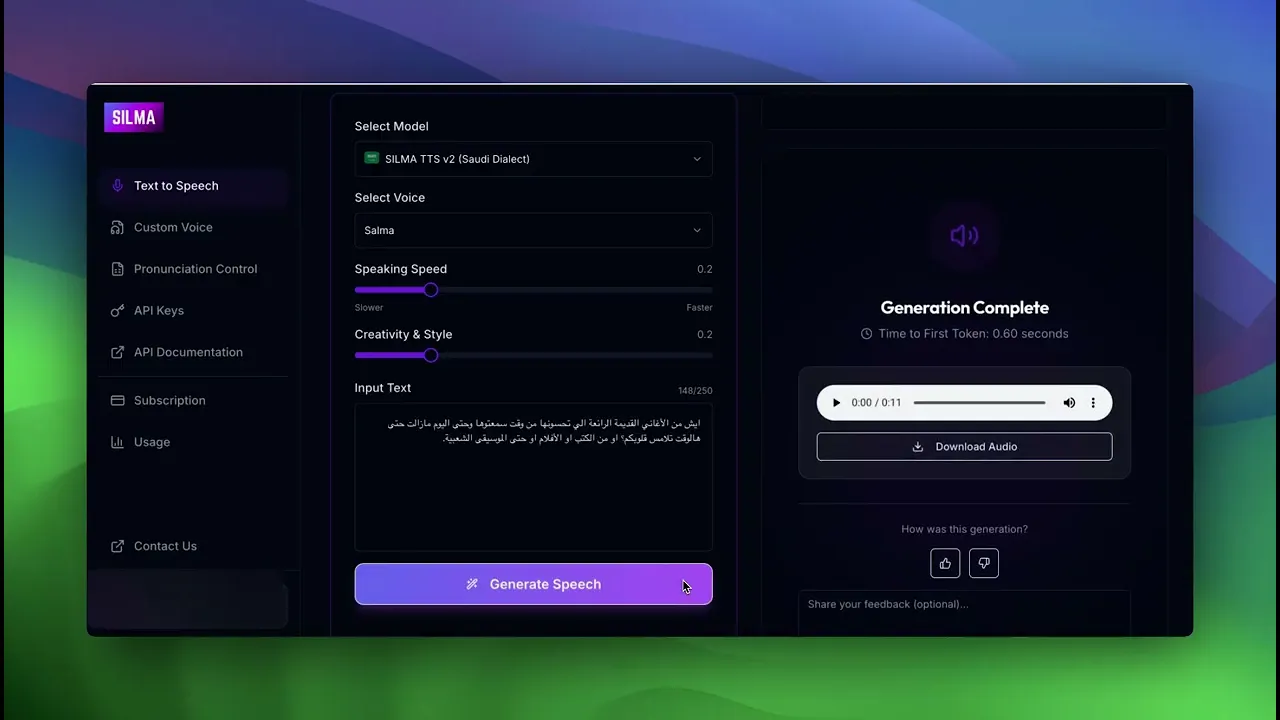
Best Arabic TTS Models - Aug 2026
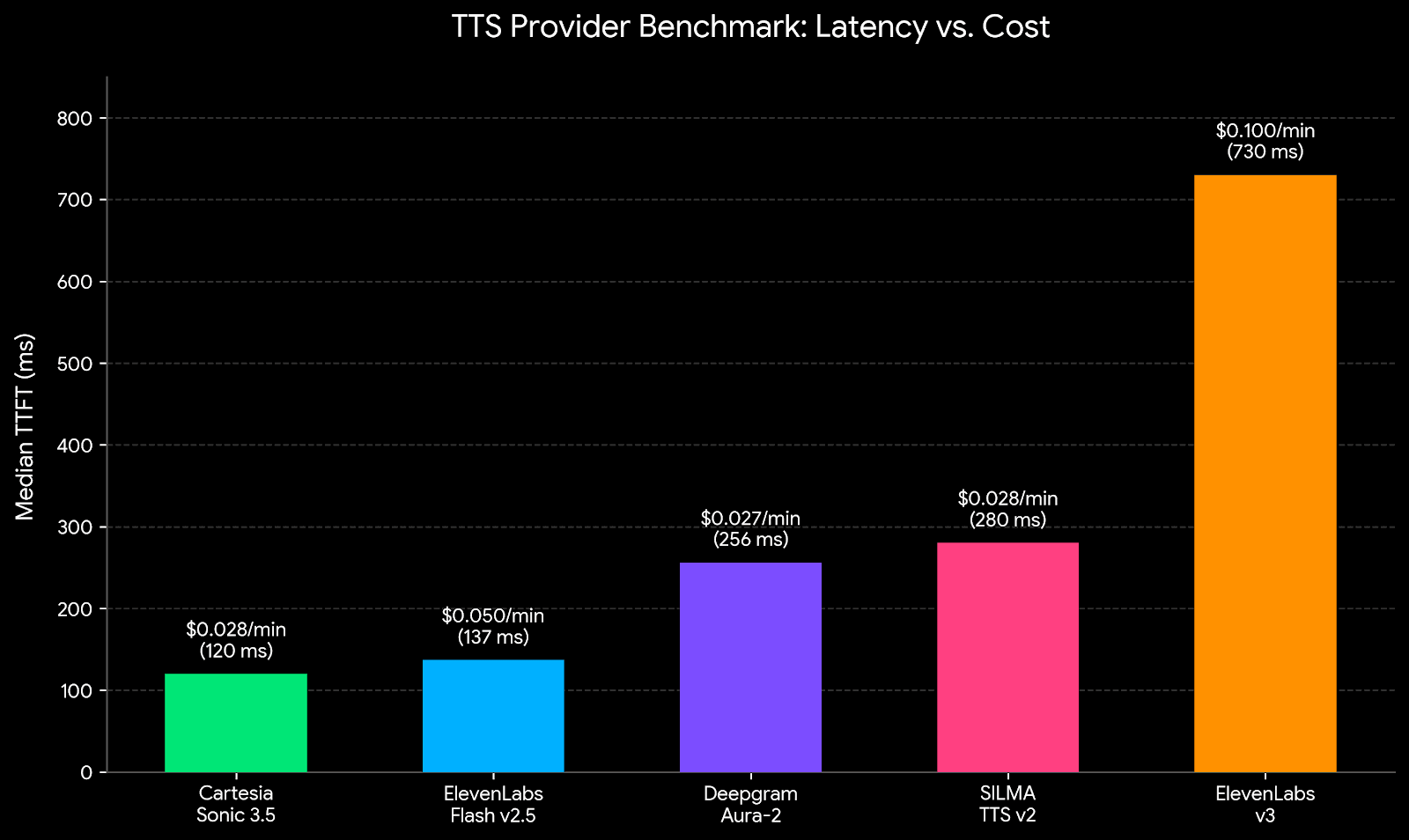
The demand for high-quality, realistic arabic text to speech solutions has surged across the Middle East and North Africa (MENA) region. From interactive AI voice agents to automated IVR customer lines, enterprise teams are actively searching for the best arabic voice ai product to deliver natural, human-like conversations in Arabic.
However, Arabic presents unique linguistic challenges for speech synthesis—including complex diacritics (tashkeel), code-switching with English, and vast regional dialectal variations.
Below, we break down three of the leading technologies in the Arabic voice ecosystem (SILMA TTS v2, Hamsa, and Munsit) to help you select the best tts model for arabic deployment.
What to Look for in the Best Arabic Voice AI Product
When evaluating the best voice ai product with arabic support, basic text reading isn't enough. Production-ready voice engines must excel in four critical areas:
Streaming Latency (TTFT): Time-to-First-Token (TTFT) determines how quickly an AI agent begins speaking after a user prompt. Lower latency is vital for conversational pacing.
Bilingual Code-Switching: Fluid transition between Arabic dialects, Modern Standard Arabic (MSA/Fus'ha), and English terms within a single sentence.
Dialectal Accuracy: Proper phonetic rendering of regional speech (e.g., Saudi Najdi, Levantine, Egyptian, or Gulf) beyond rigid MSA.
API & On-Premise Support: Flexible integration via low-latency REST/WebSocket APIs or secure on-premise hosting for enterprise compliance.
The Top Arabic Voice Contenders
1. SILMA TTS v2
SILMA TTS v2 has rapidly gained attention as a state-of-the-art engine engineered specifically for real-time conversational agents.
Ultra-Low Latency: Delivers an impressive ~170 ms TTFT (excluding network overhead), drastically reducing awkward pauses in live conversational flows.
Bilingual & Dialect Mastery: Offers native, code-switching support across Saudi Najdi, Modern Standard Arabic (MSA), and English within a unified architecture.
Enterprise Readiness: Features flexible on-premise deployment options alongside standard cloud APIs, high-quality voice cloning, and direct style/speed controls.
Cost Efficiency: Built to allow voice platforms to scale affordably without sacrificing natural audio expressiveness.
Key Takeaway: If your priority is fast streaming response times, seamless Saudi Najdi/MSA code-switching, and flexible hosting, SILMA TTS v2 sets a benchmark for modern arabic text to speech api deployments.
2. Hamsa
Hamsa provides an end-to-end voice AI platform tailored to the MENA region, offering strong multi-dialect capabilities across TTS, STT, and voice agents.
Multi-Dialect Scope: Broad coverage across Gulf, Levantine, Egyptian, North African, and Modern Standard Arabic.
Developer Ecosystem: Flexible developer tools including async job processing, streaming WebSockets, and pre-built web SDKs.
Media & Agents: Offers both "Standard" audio generation for offline media/podcasts and "Realtime" modes for interactive voice agents.
Key Takeaway: Hamsa is a versatile choice for teams needing broad geographical dialect support across both offline content creation and interactive applications.
3. Munsit
Munsit is a comprehensive, end-to-end arabic ai voice platform that covers both Speech-to-Text (STT) and Text-to-Speech (TTS).
Full-Stack Voice Capabilities: Munsit provides a full suite of voice infrastructure, offering ASR transcription alongside natural TTS synthesis (such as its Faseeh TTS model).
Deep Dialect Recognition & Generation: Built on extensive datasets, Munsit handles over 25 dialects with native-sounding GCC (Emirati, Saudi) and pan-Arab voice options.
All-in-One Studio & Enterprise Security: Features a complete workspace for voice cloning, studio synthesis, meeting transcription, and sovereign or on-premise deployment.
Key Takeaway: Munsit serves as a complete dual-engine (STT + TTS) voice infrastructure, making it a robust platform for enterprise organizations seeking an all-in-one Arabic speech stack.
Comparison at a Glance
Feature / Metric | SILMA TTS v2 | Hamsa | Munsit |
Primary Function | Dedicated Text-to-Speech (TTS) | Text-to-Speech & Voice Platform | Full Voice Platform (TTS & STT) |
Latency / TTFT | ~170 ms TTFT (Streaming Optimized) | Low Latency (Realtime API) | Real-Time Interactive & Studio |
Code-Switching | Native Arabic (Saudi Najdi/MSA) + English | Arabic Dialects + English | 25+ Dialects + English handling |
Deployment | Cloud API, Web & On-Premise | Cloud API, Web & On-Premise | Cloud API, Web & On-Premise |
Best Used For | Real-Time Voice Agents, High-Speed Customer Service | Regional Voice Agents, Content & Media | End-to-End Voice Infrastructure, Call Center Analytics & Synthesis |
What Are Good TTS Voices for Arabic That Sound Natural in Customer Service?
A frequent challenge when building conversational support systems is answering: what are good tts voices for arabic that sound natural in customer service?
Robotic pauses, flat cadence, or mispronounced diacritics instantly destroy customer trust. Natural customer service voices require:
Friendly Conversational Pacing: Pacing that emulates human breath and emphasis rather than mechanical reading.
Accurate Dialect Phonetics: Customers in Saudi Arabia, for example, expect Najdi or Khaleeji nuances over overly rigid classical Fus'ha during routine inquiries.
Low Latency Responsiveness: Latency under ~200ms prevents users from talking over the agent.
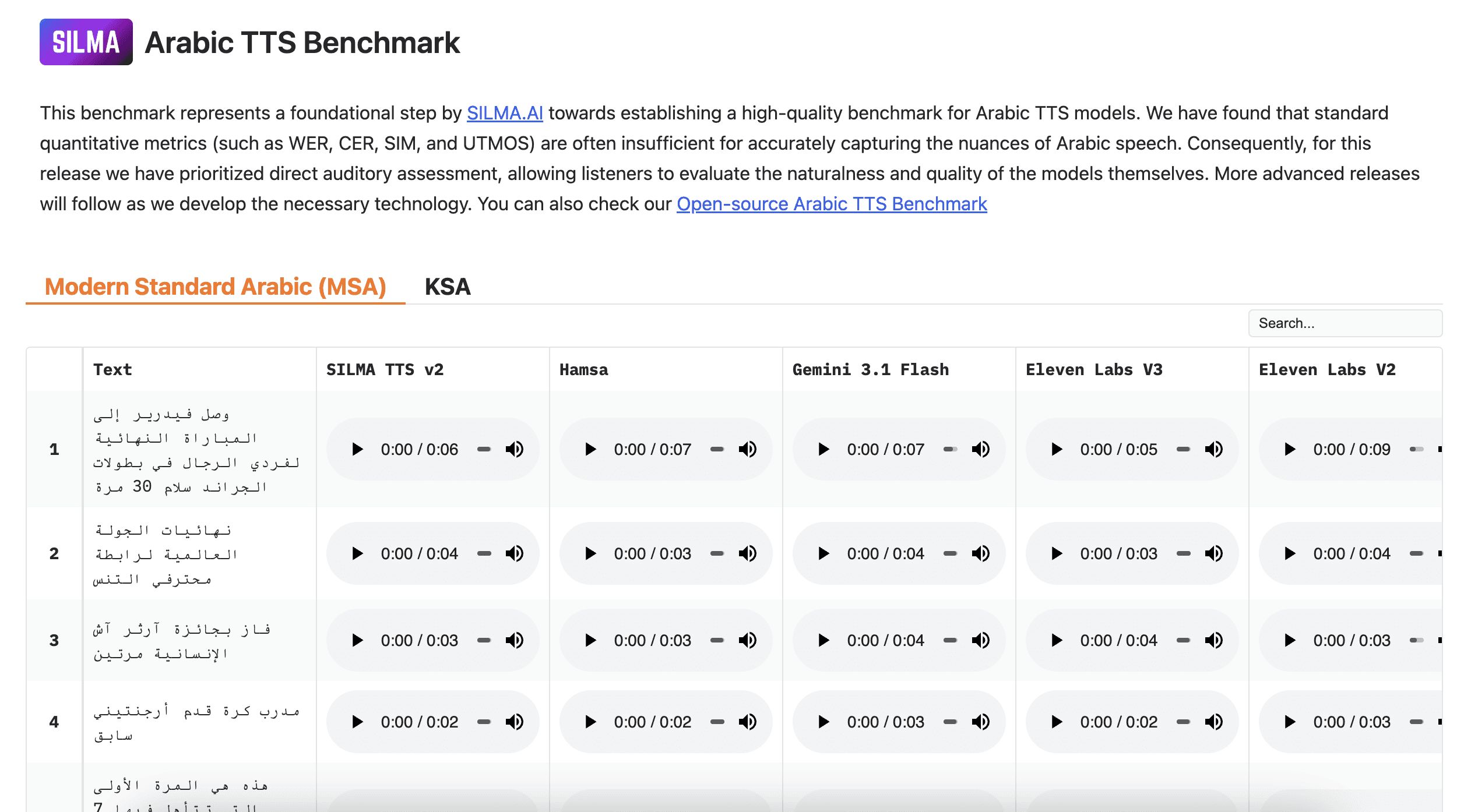
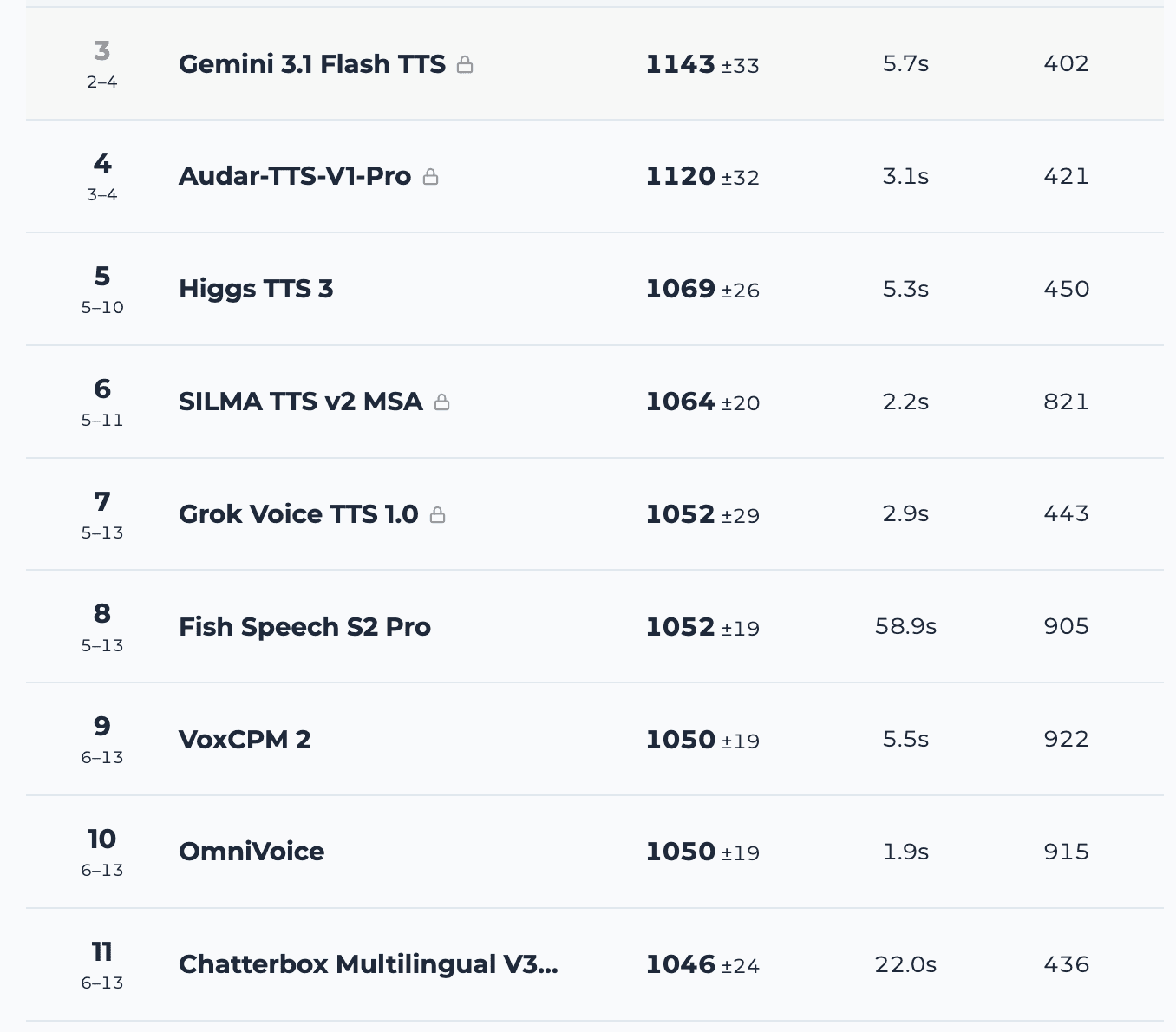
Are there any leaderboards or dedicated areas for Arabic TTS?
Yes. You can assess the voice quality yourself by using the Arabic TTS benchmark, or try the models directly in head-to-head matchups in the Arabic TTS Arena
What About International Models? (The Big Players)
Global AI platforms such as ElevenLabs, OpenAI (with multimodal speech capabilities), Azure Speech, and Cartesia offer impressive general multilingual support. When searching for the best voice ai product with arabic support, it is tempting to default to these tech giants.
However, while global models excel at English-centric workloads and generic translations, they frequently run into challenges when handling Arabic in production:
Diacritic (Tashkeel) Sensitivity: Global TTS models heavily depend on fully diacritized text. Without explicit diacritics provided in the input, big-player models often mispronounce common words, alter verb tenses, or produce flat, unnatural phrasing.
Dialect Drift & Foreign Accents: International engines are primarily trained on English or Modern Standard Arabic (MSA) datasets. When pushed to speak in specific regional accents (like Saudi Najdi or Khaleeji), their output often suffers from "accent leakage" sounding like a non-native speaker reading classical script.
Mid-Sentence Code-Switching: Real-world enterprise conversations in the GCC often combine localized Arabic phrasing with English technical terms (e.g., "أبغى أغير الـ Subscription تبعي"). Global models struggle with fluid phonetic transitions, often switching accents jarringly.
Data Sovereignty & Local Hosting: Enterprise and government entities across Saudi Arabia and the broader GCC often require local cloud hosting or on-premise deployment. Many global APIs operate exclusively out of public Western data centers.
The Bottom Line on Big Players: International tools work well for generic, English-first global apps or basic text reading. However, for high-stakes regional workflows especially interactive customer support agents in the Middle East, specialized, region-focused engines like SILMA TTS v2 deliver superior dialect accuracy, lower streaming latency (~170ms TTFT), and true code-switching performance.
What about latency benchmarks and prices?
Time to First Token (TTFT) is the definitive metric for conversational AI. It measures the delay between sending text to the API and receiving the first playable chunk of audio. Delays over 500ms lead to unnatural pauses, causing users to interrupt or disengage.
Based on recent 2026 benchmark data (with calls made from the EU after warm-up), here is how the top players stack up in terms of latency and pricing:
Provider / Model | Min TTFT | Median TTFT | Mean TTFT | Cost per Minute |
Cartesia Sonic 3.5 (sonic-3.5) | 102ms | 120ms | 123ms | $0.028 |
ElevenLabs Flash v2.5 (fastest) | 131ms | 137ms | 137ms | $0.050 |
Deepgram Aura-2 (latest) | 251ms | 256ms | 260ms | $0.027 |
SILMA TTS v2 (silma-tts-v2-ksa) | 279ms | 280ms | 286ms | $0.028 |
ElevenLabs v3 | 677ms | 730ms | 725ms | $0.100 |
Finding the Best Arabic TTS Engine for Your Needs
Selecting the best arabic tts depends on your application architecture:
For Real-Time Voice AI & Customer Service Agents: SILMA TTS v2 offers an optimal balance of low streaming latency (~170ms TTFT), native Saudi Najdi/MSA code-switching, and cost-efficient scaling.
For Multi-Region Media Content: Hamsa provides broad regional coverage across diverse dialectal groups.
For Speech Recognition & Analytics: Munsit stands out as an STT engine to pair alongside a high-performance TTS output.
Evaluating these solutions through live API tests with your specific audio data will help identify the ideal match for your conversational AI setup.